Best Electric Golf Trolley Batteries for Long-Lasting Power
Choosing the right battery for an electric golf trolley can extend range, improve reliability, and reduce maintenance. This guide highlights five top options, covering lithium and lead-acid solutions, with a focus on lifespan, safety features, and real-world performance. Each product section includes key specs and what to consider when upgrading or replacing a golf cart battery system. Whether you want maximum cycle life, rapid charging, or easier installation, these choices address common needs for American golfers.
| Product | Brand | Type | Key Benefit |
|---|---|---|---|
| LOSSIGY 48V Lithium Golf Cart Battery | LOSSIGY Store | LiFePO4 48V | High energy density, built-in BMS, long life |
| Battery Renew Solution For Golf Cart Batteries | Samorillo Store | Lead-Acid Desulfator | Restores sulfates, extends life |
| Rocket L-875 170Ah 8V Battery | — | Lead-Acid 8V | High capacity, Trojan replacement |
| 48V 100Ah Lithium Battery Kit | MEYULMOL Store | LiFePO4 48V | Integrated LCD, strong BMS, lighter weight |
| Mighty Max 12V 35Ah GEL Battery | Max Battery | GEL 12V | Maintenance-free, reliable in extreme temps |
LOSSIGY 48V Lithium Golf Cart Battery

The LOSSIGY 48V lithium battery is designed for golf carts with a 48V system. It uses high-grade A cells to deliver stable performance and strong power. A built-in BMS protects the pack from temperature extremes, short circuits, and over-current conditions, supporting long life with up to thousands of cycles. Installation is straightforward, and the self-contained design simplifies upgrading from traditional lead-acid systems while offering a lighter, more compact option for improved handling and performance.
Key features include Grade A cells for energy density and a built-in battery management system for safety. The battery is intended for long-term use, with an emphasis on reliability in variable golf course conditions and compatible with 48V carts looking for a modern LiFePO4 solution.
Battery Renew Solution For Golf Cart Batteries

This lead-acid desulfator is designed to restore and extend the life of golf cart batteries. It helps increase charge capacity and general performance by breaking up sulfates that degrade plates. The formula is suitable for 6V, 8V, and 12V batteries and can be used annually or per refurbishment cycle. By cleansing battery cells, it aims to improve overall efficiency and power delivery across a range of vehicles, including golf carts, motorcycles, and marine applications that use lead-acid chemistry.
Rocket L-875 170Ah 8V Golf Cart Battery

This 8V lead-acid battery (set of six) delivers substantial capacity for longer run times on 8V golf cart configurations. With 170 Ah per cell, it supports robust power output for climbing hills and sustaining consistent performance over extended rounds. The Trojan replacement style aims to provide dependable compatibility for carts built around 8-volt battery configurations, making it a straightforward upgrade for enthusiasts seeking proven, heavy-hitting lead-acid performance.
48V 100Ah Lithium Battery Kit With LCD Monitor

This upgraded lithium battery kit targets a complete 48V system with a 100Ah capacity, featuring an integrated LCD display for real-time monitoring. The kit includes a dedicated 18A charger and a 200A BMS, delivering strong protection and fast recovery. It emphasizes lighter weight and higher energy density compared with traditional lead-acid systems, plus a compact design ideal for golf carts that require efficient power delivery and simplified maintenance. Real-time data helps operators optimize charging and usage on the course.
Mighty Max 12V 35Ah GEL Battery
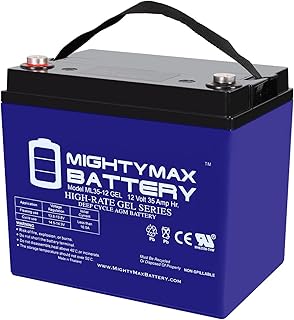
The Mighty Max 12V 35Ah GEL battery provides maintenance-free operation with slower self-discharge, which helps retain charge during periods of limited use. GEL chemistry is designed for dependable performance across a wide temperature range, making it a practical choice for varied golf course climates. It is suitable for applications requiring a compact, sealed option with solid resilience to temperature shifts and demanding load demands.
Buying Guide
- Battery chemistry: Lithium iron phosphate (LiFePO4) offers longer life, lighter weight, and integrated BMS, but at a higher upfront cost. Lead-acid options are cheaper upfront but heavier and require more maintenance.
- Capacity and voltage: Match the cart’s nominal voltage (commonly 48V) and target amp-hour capacity to achieve desired range and performance. Consider whether your cart supports a single large pack or modular packs.
- Protection and monitoring: A robust BMS with over-current, short-circuit, and thermal protection extends life and safety. LCD monitoring helps track state of charge, pack health, and temperature in real time.
- Weight and handling: LiFePO4 systems are significantly lighter, improving acceleration and handling. Weigh considerations against frame tolerance and mounting space.
- Charging compatibility: Ensure the charger is matched to the battery chemistry and capacity (e.g., 18A charger for a 48V 100Ah LiFePO4 kit). Rapid charging can reduce downtime but may impact cycle life if not managed properly.
- Cycle life and warranty: Higher cycle life equals longer intervals between replacements. Review manufacturer warranties and service support.
- Maintenance needs: Gel and lead-acid options generally require less advanced management but may need water top-offs or sulfate cleaning over time.
- Environmental and usage context: Climate, terrain, and planned duty cycles influence choice—cold temperatures can reduce lead-acid efficiency, while LiFePO4 handles a wider range.
- Installation and integration: Self-contained packs simplify installation, but verify compatibility with existing carts, mounts, and wiring harnesses.
- Total cost of ownership: Compare initial price, maintenance, charging efficiency, and replacement cadence to determine true lifetime cost.