Best Golf Grip Trainer Club for Consistent Swings and Muscle Memory
The Best Golf Grip Trainer Club guide helps buyers choose the right training aid to improve grip, tempo, and swing consistency. This article highlights five leading options, explaining who each is best for and why. Whether you’re a beginner refining grip or a seasoned player seeking tempo control, these tools target common swing faults and build automatic muscle memory. The buying table below summarizes key attributes to compare quickly.
Product Comparison Summary
| Product | Best For | Key Benefit | Notes |
|---|---|---|---|
| PureOne PureGrip | Beginners to intermediate golfers | Guided grip placement for automatic muscle memory | Right-handed, small club head |
| SKLZ Golf Grip Trainer (Attachment) | All hand sizes, full bag practice | Neutral grip positioning across clubs | Versatile with standard grips |
| SKLZ Tempo & Grip Trainer | Indoor and outdoor practice | Tempo and grip training together | Two weight adjustments |
| Golf Grip Trainer Iron (Video Lesson) | Lessons and drills learners | QR video guidance for grip and swing | Lesson-focused, built for instruction |
| honharo Golf Grip Trainer | Right-handed players seeking quick fit | Fast grip correction and muscle memory | Non-slip, easy install |
PureOne PureGrip™ Golf Training Aid Club
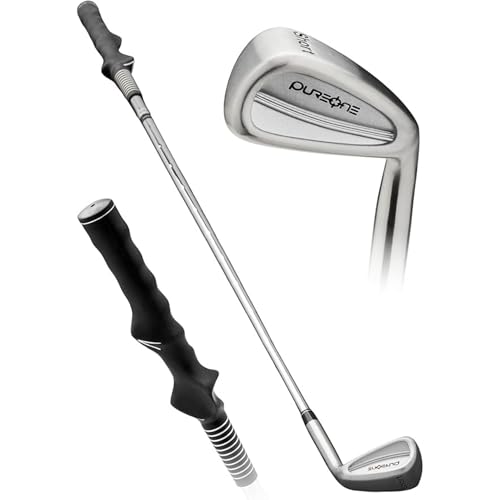
Best for beginners who want consistent grip setup, the PureGrip training club molds the hands into the ideal grip position. It naturally guides hand placement to improve control, accuracy, and confidence on the course. Repetition helps build automatic muscle memory for proper hand positioning when using real clubs. This makes it a solid choice for players developing a repeatable grip before integrating with full-length clubs.
Who it’s for: new or improving golfers focusing on grip mechanics. Why selected: its molded grip design directly targets hand placement to reduce grip-related faults.
Limitation: as a training aid, it emphasizes grip setup more than full swing mechanics; expect to supplement with actual swing practice.
SKLZ Golf Grip Trainer (Attachment)

Best for players who want a universal trainer that works with any club grip from driver to wedge. The molded guide places fingers, thumbs, and palms in a neutral grip, helping eliminate common faults like a strong grip or an open right hand that can lead to slicing or hooking. It builds muscle memory through frequent use and reinforces the correct hand position across a full bag.
Who it’s for: golfers seeking a single trainer usable with all clubs. Why selected: compatibility with standard grips supports consistent mechanics across the set.
Limitation: some players may prefer a fully separate training club rather than an attachment on existing grips.
SKLZ Golf Tempo & Grip Trainer

Best for players who want to refine both grip and swing tempo during practice. This trainer emphasizes correct hand position for the right grip and offers two weight adjustments for iron and wood practice. It is useful in both indoor and outdoor settings, making it flexible for quick warm-ups or longer sessions before play.
Who it’s for: players seeking combined grip alignment and tempo work. Why selected: dual focus supports more consistent swing timing and contact quality.
Limitation: tempo-focused tools may require longer sessions to see progressive gains in real-game swing tempo.
Golf Grip Trainer Iron (Video Lesson Included)

Best for learners who want guided instructions. The included QR code unlocks a video lesson covering proper grip, setup, and drills to practice effectively with the club. It focuses on fixing ball striking by building correct hand positioning and swing fundamentals, supporting permanent memory for more consistent contact.
Who it’s for: players who prefer structured, lesson-based practice. Why selected: direct video guidance complements practical grip training for improved technique.
Limitation: may require scanning QR codes and following the lesson sequence to maximize benefits.
honharo Golf Grip Trainer

Best for right-handed players seeking quick, repeatable grip corrections. The trainer guides hands into the proper grip position, promoting proper muscle memory and swing alignment. It is designed for easy installation and a secure feel, making it a practical accessory for practice between rounds or at the range.
Who it’s for: right-handed golfers needing fast grip corrections. Why selected: emphasis on muscle memory and easy, portable use.
Limitation: may offer a more limited feature set compared with multi-function tempo or lesson-integrated tools.
HRUIYL Golf Grip Trainer

Best for beginners and intermediate players aiming to improve hand positioning and swing consistency. This trainer emphasizes a proper grip and muscle memory for better control over time. It features a non-slip grip to ensure secure practice and a straightforward setup for quick use before sessions.
Who it’s for: players seeking a simple, durable training aid. Why selected: straightforward design supports steady progress in grip mechanics.
Limitation: may provide fewer advanced features than weighted or tempo-based trainers.
Golfupp Golf Swing Trainer Aid

Best for right-handed players focusing on tempo and swing path. This weighted club aims to help find consistent swing tempo by creating a low-impact stretch during the backswing and a lag-friendly feel. It supports repetitive practice to improve timing and club head acceleration.
Who it’s for: tempo-focused golfers who want an indoor training option. Why selected: adjustable weight modes and a defined tempo target support repeatable practice.
Limitation: it’s a weighted training aid, so it may be less comfortable for very short practice sessions or travelers without a dedicated practice space.
Buying Guide
What matters most when choosing a golf grip trainer?
Grip accuracy and consistency: Look for trainers that actively guide hand placement or promote muscle memory. Tools with molded grip guides or visual cues tend to yield clearer improvements in grip setup.
Compatibility: If you prefer a single trainer for multiple clubs, consider attachments or models that fit standard grips from driver to wedge. Universal fitters reduce the need for multiple devices.
Tempo and swing feedback: Some devices blend grip training with tempo work. If you want rhythm training, prioritize products offering weight adjustments or timing cues.
Portability and setup: Practice ease matters for frequent use. Quick-install designs and lightweight options are beneficial for on-the-go practice or pre-round warm-ups.
Instructional value: QR video lessons or included drills can accelerate learning, especially for beginners seeking structured guidance.
What are common pitfalls to avoid?
- A trainer that focuses only on grip without addressing swing mechanics may leave other faults uncorrected.
- Overly rigid devices can hinder comfort or natural feel; balance firm guidance with feel-based practice.
- Buying multiple specialized tools can lead to clutter; prioritize one versatile option if you’re new to grip training.
How to use grip trainers effectively
- Practice with a routine: start with 5–10 minutes of grip training, then transition to full-swing practice.
- Use consistent setup: replicate the grip cue each time you pick up a real club to build automatic memory.
- Combine with drills: pair grip training with target-oriented drills to reinforce correct swing paths.
FAQ
- Q: Do grip trainers improve accuracy immediately? A: They help by promoting proper grip and muscle memory, but sustained results require regular practice with real clubs.
- Q: Are attachment-style trainers compatible with all clubs? A: Most fit standard grips, but always confirm compatibility for your specific set.
- Q: Should beginners start with a grip trainer before practicing swings? A: Yes, to establish correct hand placement before adding full-swing mechanics.
- Q: Can grip trainers replace lessons? A: They complement instruction by reinforcing grip mechanics between lessons.
- Q: Is one trainer enough for long-term improvement? A: A single versatile trainer can be effective, but supplement with tempo or swing-focused drills as needed.
- Q: How often should I train with these aids? A: Short, frequent sessions (daily or several times a week) yield the best long-term results.